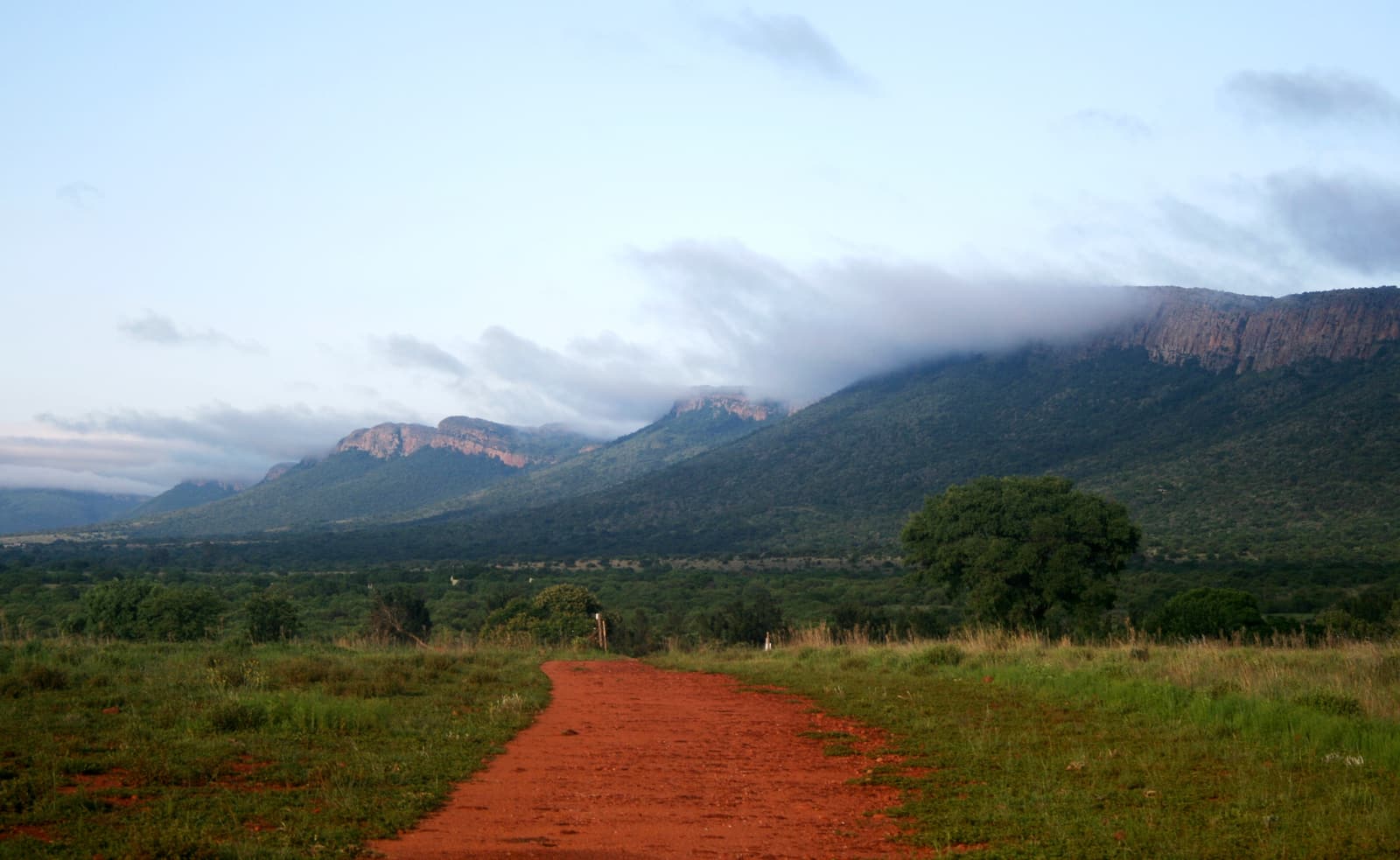
The Cradle of Humankind is a UNESCO World Heritage Site about 50 km north-west of Johannesburg, covering some 47,000 hectares of grassy dolomite hills. Beneath them lie limestone caves that have preserved an unmatched record of our early relatives, from australopithecines more than three million years old to Homo naledi, who lived here only about 300,000 years ago.
Why it matters
In 1924 the “Taung Child” skull, found at a lime quarry far to the south-west, convinced anatomist Raymond Dart that humanity’s roots lay in Africa. Few believed him. It was the adult fossils that Robert Broom blasted out of Sterkfontein, Kromdraai and Swartkrans from 1936 onwards — among them Mrs Ples in 1947 — that settled the argument. Since then the area has produced a large share of all the early hominin fossils ever found: Little Foot, the most complete australopithecine skeleton known; Australopithecus sediba from Malapa in 2008; and more than 1,500 pieces of Homo naledi from the Rising Star cave in 2013.
UNESCO inscribed the “Fossil Hominid Sites of Sterkfontein, Swartkrans, Kromdraai and Environs” in 1999. The popular name, the Cradle of Humankind, followed. A caution your guide will probably repeat: the name is a slogan, not a scientific claim. Equally important fossils come from East Africa, and no one place can claim to be where humanity began. What the Cradle offers is an extraordinary density of evidence in one accessible landscape.
What to see
Two sites are open to everyone, and most visits are built around them. Other places add wildlife, culture and scenery.
 Fossil sites & caves
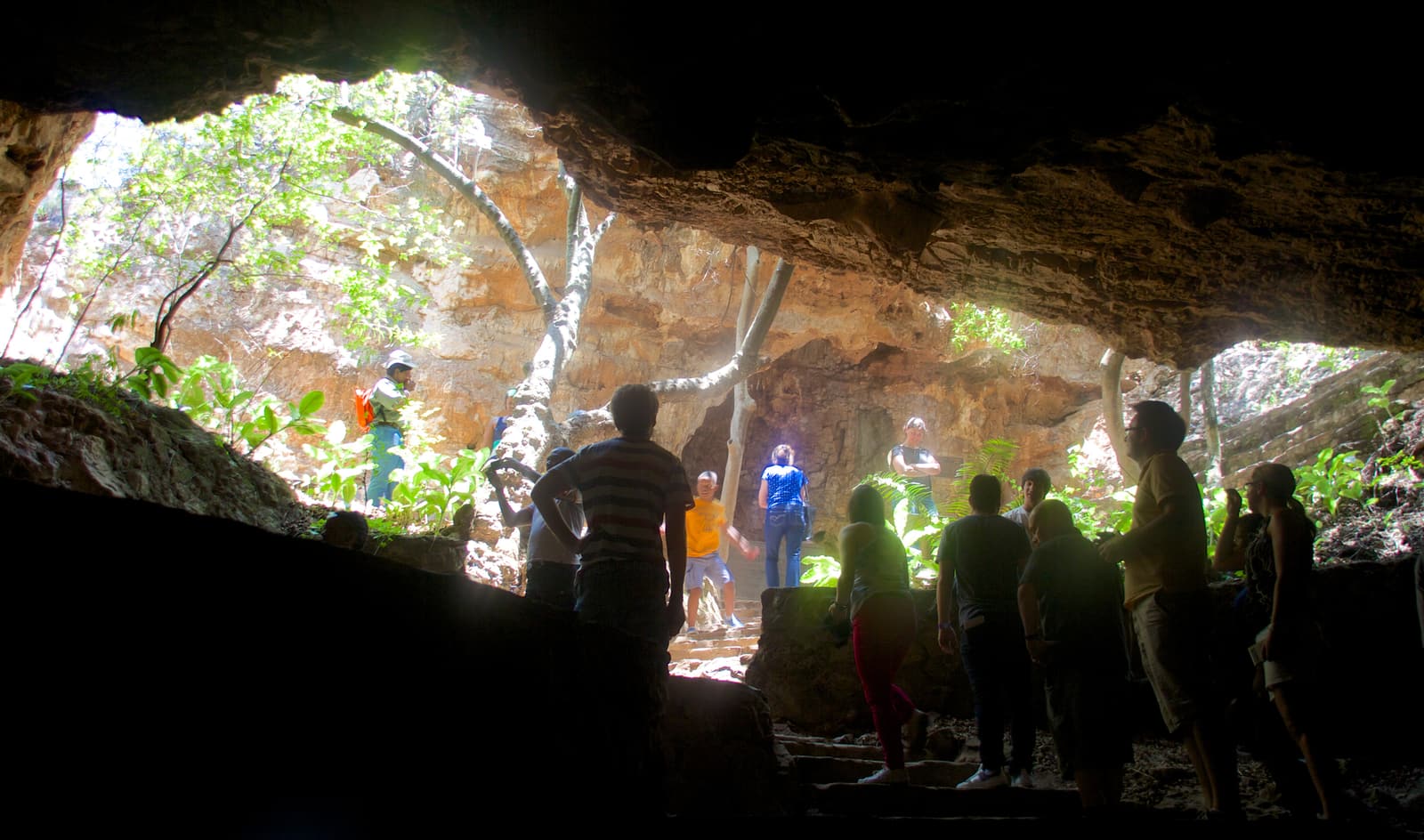
Sterkfontein Caves
Home of Mrs Ples and Little Foot
The most productive early-hominin site on Earth. Dolomite caves near Krugersdorp where Mrs Ples was blasted out of the rock in 1947 and where the near-complete skeleton of Little Foot lay hidden for millions of years. Guided tours take you underground; the caves reopened in 2025 after a long closure, so check current opening days.
 Fossil sites & caves
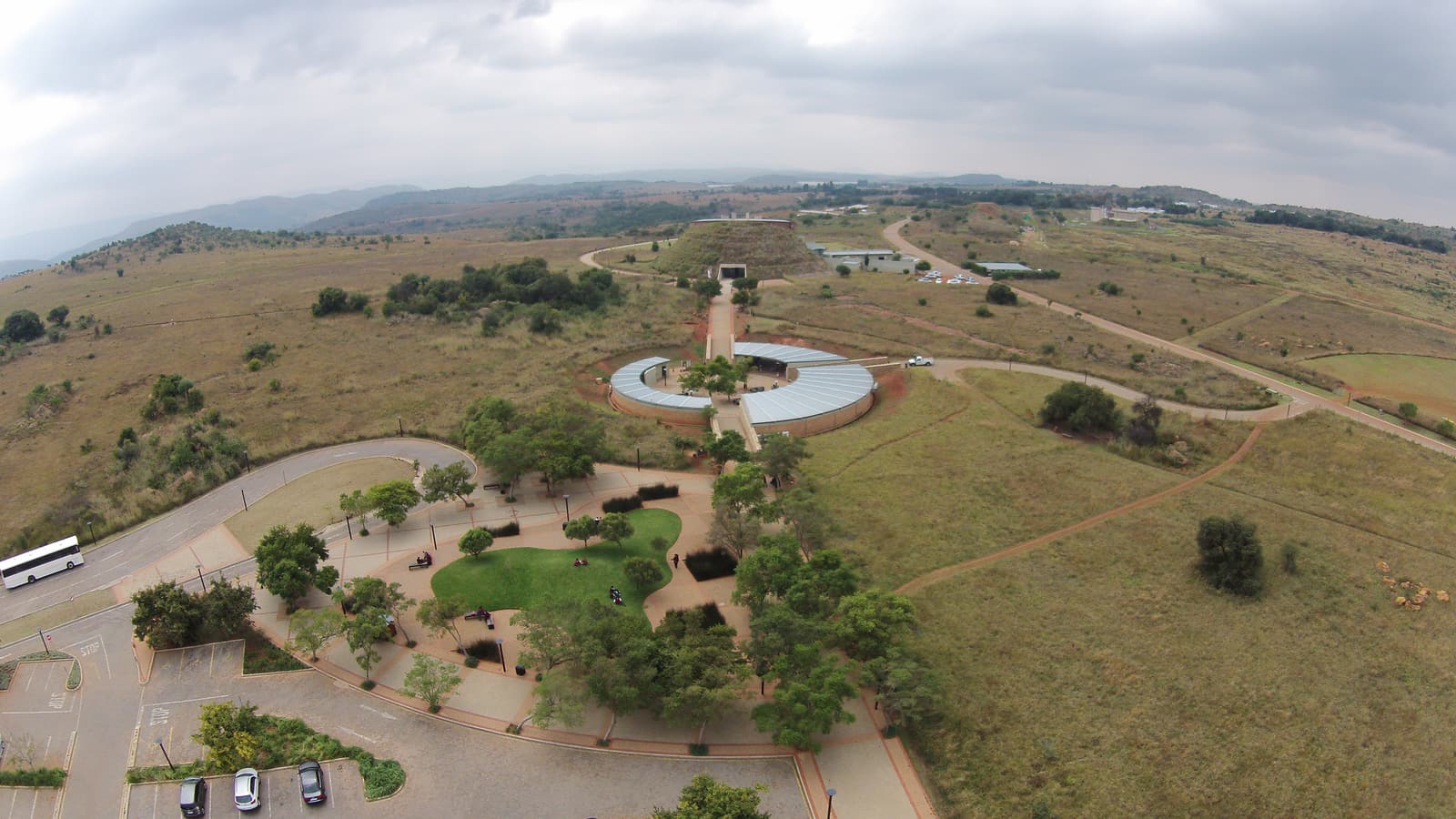
Maropeng Visitor Centre
The official visitor centre of the Cradle
Maropeng means “returning to the place of origin” in Setswana. Its grass-covered Tumulus building holds an interactive exhibition on the origins of the Earth and of humankind, entered by an underground boat ride through the elements. The best single stop for families and for understanding the whole World Heritage Site.
 Fossil sites & caves
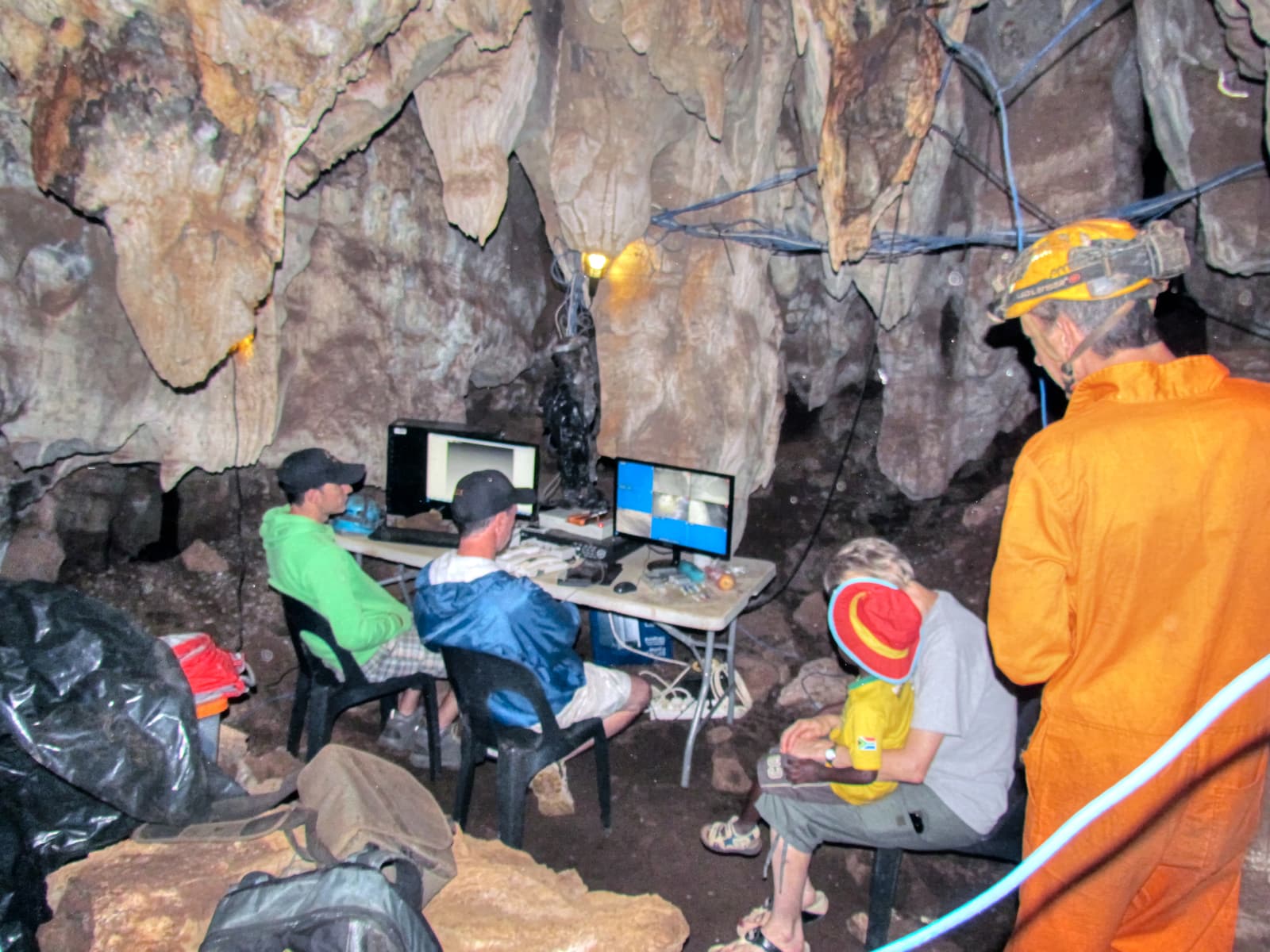
Rising Star Cave & Homo naledi
The discovery that rewrote the textbooks
In 2013 two cavers squeezed into a hidden chamber of the Rising Star system and found the floor littered with bones. They belonged to Homo naledi, a previously unknown human relative, and the haul became the largest collection of hominin fossils ever found in Africa. The cave itself is a working research site, not a visitor attraction — here is how to experience the story.
 Wildlife & culture
Rhino & Lion Nature Reserve and Wonder Cave
A game reserve inside the World Heritage Site
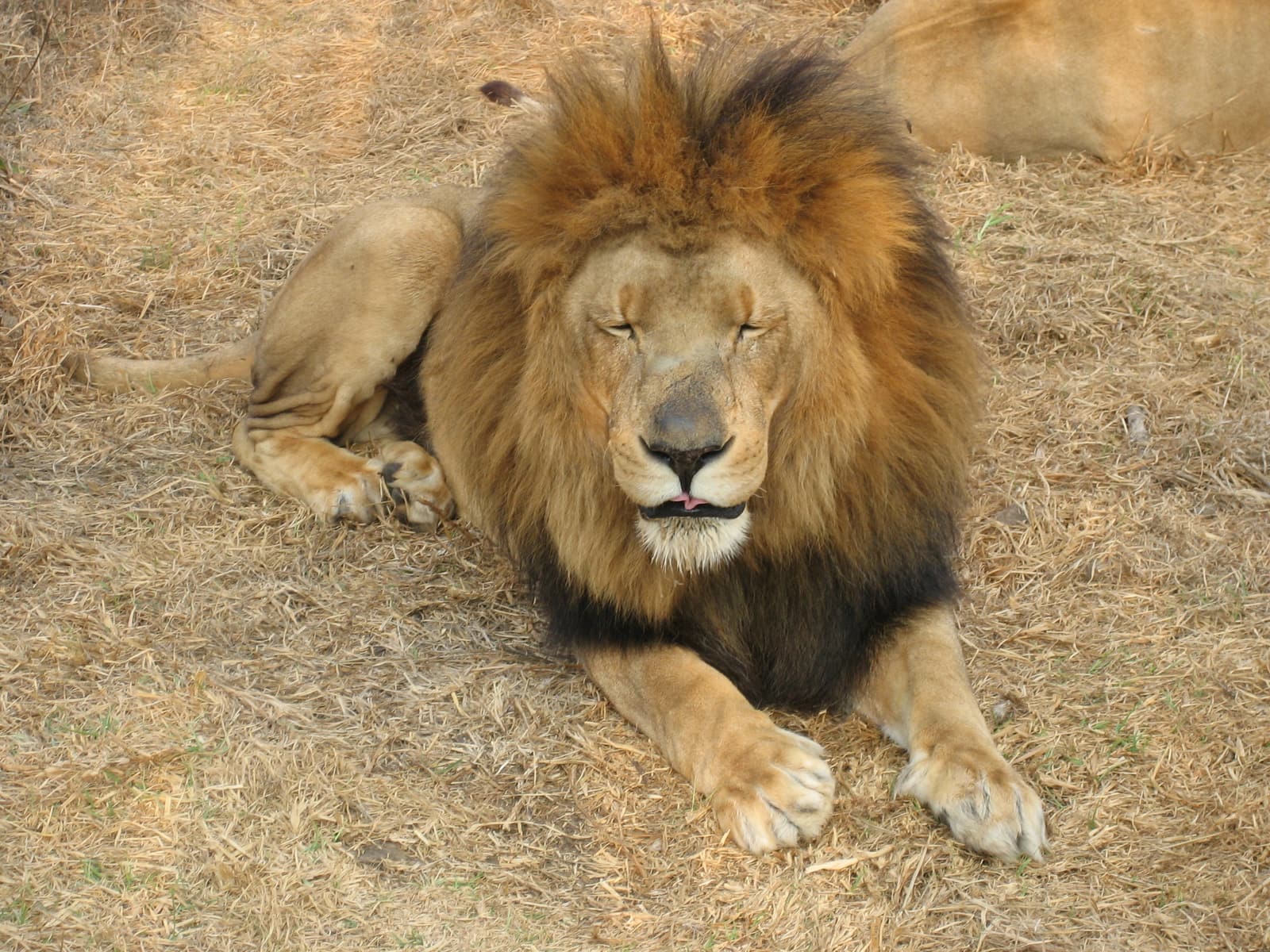
A privately owned reserve of about 1,600 hectares at Kromdraai, in the heart of the Cradle, now trading as the Bothongo Rhino & Lion Nature Reserve. Drive yourself or join a game drive among white rhino, buffalo and antelope, visit the predator camps, then descend into Wonder Cave, an enormous dripstone chamber.
Opening hours and fees
Arrangements at the Cradle’s attractions have changed repeatedly since 2020, so treat the following as a guide and confirm before you travel.
- Sterkfontein Caves: reopened in April 2025 under Wits University. At the time of writing, open Tuesday to Sunday from about 9:00 to 16:00 (closed Mondays), with guided tours roughly hourly and the last around 15:00. Adult tickets were around R150, with reductions for children and pensioners. Tours take small groups and can sell out, so book online ahead for weekends.
- Maropeng: generally open daily from about 9:00 to 17:00, with the last boat ride around 16:00. Prices have been broadly similar to Sterkfontein’s; combination tickets have been offered at times.
- Wildlife parks and Lesedi: open daily in most cases, with guided drives and shows at set times. Check each attraction’s current schedule.
Guided tours from Johannesburg sometimes include entry tickets and sometimes do not — compare carefully on the tours page.
How long to stay: sample itineraries
Half a day
Leave Johannesburg by 8:00. Take the first or second cave tour at Sterkfontein, drive ten minutes to Maropeng for the boat ride and exhibition, and be back in the city for a late lunch. This is what most half-day tours do.
One full day
Sterkfontein and Maropeng in the morning; lunch with a view at Maropeng or at one of the Cradle’s country restaurants; then either a game drive and Wonder Cave at the Rhino & Lion Nature Reserve, or the Lion & Safari Park on the way home via the R512.
A weekend (two days, one or two nights)
Day one: the fossil sites, a long lunch, and sunset from your lodge. Day two: a dawn hot-air balloon flight over the Magalies valley, breakfast, then Hartbeespoort Dam for the cableway and a cruise, or Lesedi Cultural Village, before returning to the city.
Three or four days in Gauteng
Add a day for Soweto and the Apartheid Museum, and another for Pretoria or a Big Five safari in the Pilanesberg. Together with the Cradle, that is a rich and varied introduction to South Africa before you fly on to Cape Town or Kruger.
Safety
The Cradle itself is rural and quiet, and the visitor sites, lodges and reserves are secure. The risks are the ordinary ones of travelling in Gauteng:
- Keep car doors locked and windows mostly up; put bags and phones in the boot or out of sight before you set off.
- Stay alert at traffic lights and intersections in built-up areas, where “smash-and-grab” theft occurs.
- Avoid driving after dark on unlit rural roads — for crime, potholes, pedestrians and stray animals alike.
- Do not stop for apparent breakdowns or people flagging you down; drive to a filling station or lodge instead.
- Never pick up fossils, enter fenced excavations or explore old mine workings.
- In the reserves, stay in your vehicle except at marked rest areas.
- Summer thunderstorms bring dangerous lightning. If one builds, get indoors or into a car; do not shelter under trees or on ridges.
The national emergency number from a mobile phone is 112; the police are on 10111.
Health
The Cradle and the whole of Gauteng are malaria-free. Tap water at hotels and visitor centres is normally safe to drink. The area lies at around 1,400–1,500 metres above sea level: the sun is fierce in every season, so wear a hat and sunscreen and drink more water than you think you need. Good private hospitals are found in Krugersdorp, Roodepoort and Sandton; take out travel insurance that covers them.
Money and costs
The currency is the South African rand (ZAR). Cards are accepted almost everywhere — ticket offices, restaurants, lodges and filling stations — and contactless payment is common. Carry a little cash for tips, parking attendants and craft stalls. ATMs are found in Krugersdorp, Muldersdrift and Lanseria rather than in the Cradle itself.
Tipping is expected: 10–15% in restaurants, a few rand for fuel attendants and car guards, and something for your guide and driver at the end of a tour if you were happy.
By international standards the Cradle is good value. Entrance tickets cost the equivalent of a few euros each, guided tours from Johannesburg start around €95–125, and comfortable lodges are far cheaper than their equivalents in Europe.
What to pack and wear
- Closed shoes with grip for the cave stairs — not sandals or heels.
- A light jacket or fleece: caves are about 16–18 °C all year, and winter mornings on the Highveld are cold.
- Hat, sunglasses and sunscreen.
- A rain jacket from October to March.
- Water and, for self-drivers, snacks.
- Binoculars and a zoom lens for the reserves.
- A power adaptor: South Africa uses 230 V with large three-round-pin Type M sockets and, increasingly, Type N. Scheduled power cuts (“load-shedding”) have eased greatly, but a charged power bank is still sensible.
Eating and drinking
The Cradle has become a weekend food destination for Johannesburg. Maropeng has a restaurant and café with a terrace; several lodges and boutique hotels run restaurants open to non-residents, some of them among the best-regarded in the province; and there are farm stalls, cheese makers, craft breweries and tea gardens along the country roads, particularly around Muldersdrift, Kromdraai and Skeerpoort. At weekends, book ahead for lunch. On weekdays some places close, so check before you count on one.
Cycling, walking and other activities
Gauteng’s cyclists treat the Cradle as their training ground. Dedicated cycle lanes run beside stretches of the main roads, and early on Saturday and Sunday mornings you will see hundreds of riders. Mountain-bikers have purpose-built trail parks at several farms and lodges, usually with a small day fee, a café and bike wash. Visitors can hire bikes at some of these venues.
Other options include guided walks and trail runs in private reserves, horse riding, fly-fishing, quad biking, sculpture parks and art studios that open at weekends, and spa days at the larger lodges. Hot-air balloons fly from the Magalies valley at dawn all year round.
With children
The Cradle is very family-friendly. Maropeng’s boat ride and hands-on exhibits suit all ages; Wonder Cave is roomy and has a lift; and the wildlife parks are an easy win. Sterkfontein’s cave tour is fine for sure-footed children from about six, but there are many stairs and no lift, and pushchairs cannot go underground.
Accessibility
Maropeng is step-free and suitable for wheelchair users. The Sterkfontein cave tour is not accessible, though the exhibition and parts of the surface site are. In the wildlife parks, viewing is from vehicles. Tell tour operators about mobility needs when you book; private tours are the easiest to adapt.
Practical facts
- Language: English is spoken everywhere; you will also hear Setswana, isiZulu, Sesotho and Afrikaans.
- Time zone: South African Standard Time, UTC+2, with no daylight saving.
- Driving: on the left. Seat belts are compulsory.
- Mobile coverage: good at the main sites, patchy in valleys. Local SIM and eSIM data is inexpensive.
- Visas: citizens of many countries, including most of the EU, the UK, the USA and Brazil, can visit South Africa visa-free for a limited stay. Rules change — check official sources for your nationality.
- Drones: not permitted at the heritage sites or in the reserves without permission.