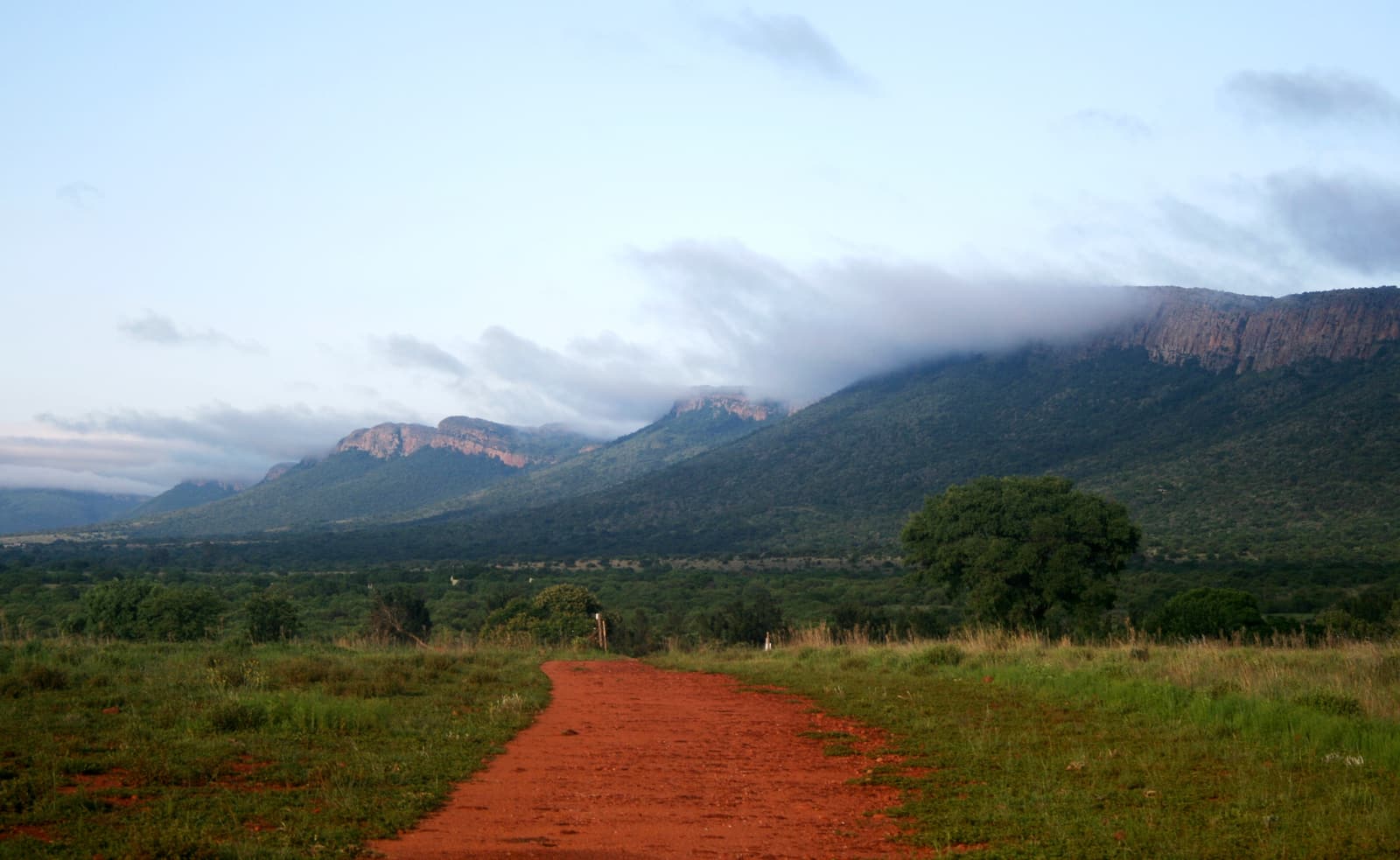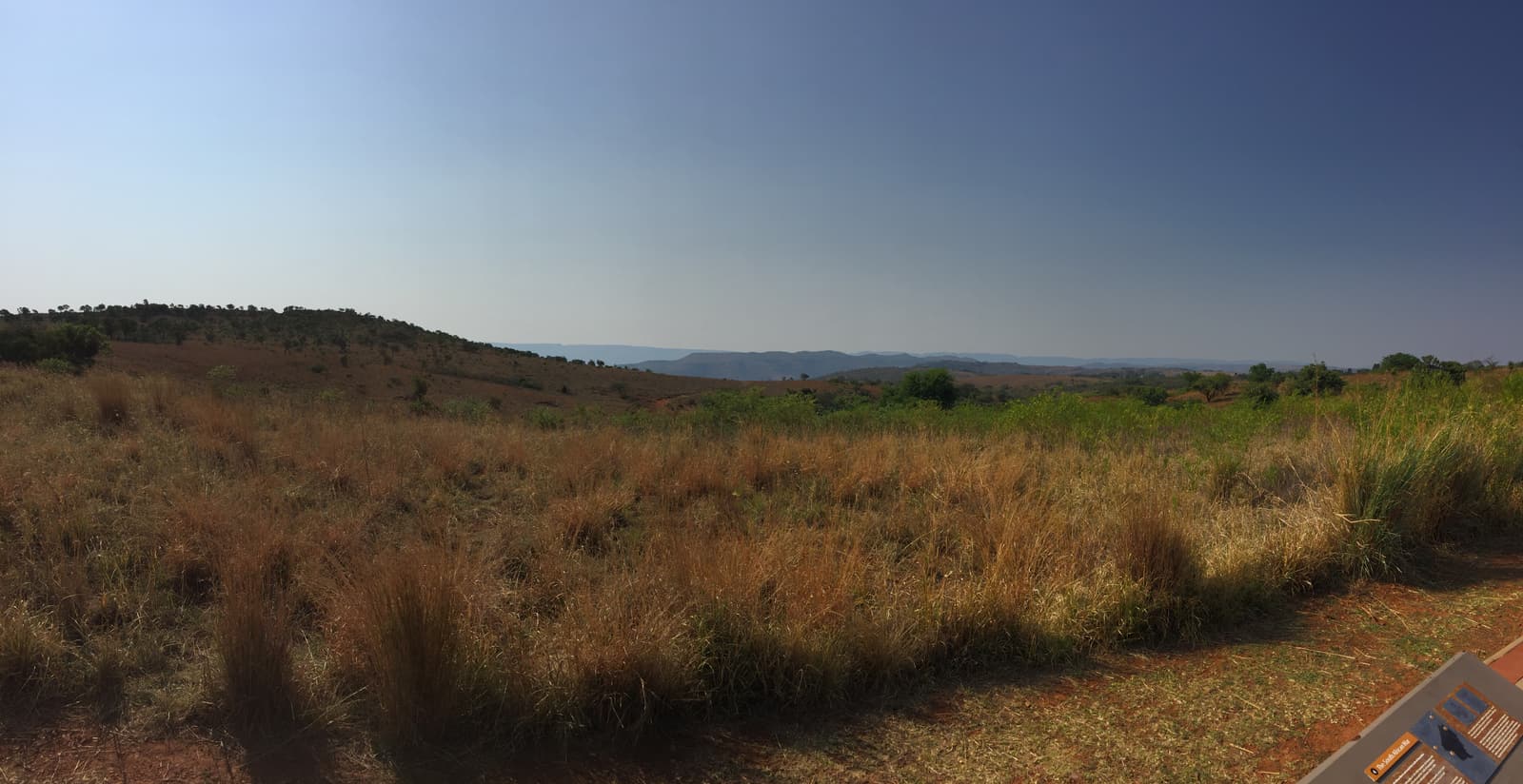
There is no bad month to visit the Cradle of Humankind. The caves hold a steady 16–18 °C, Maropeng is indoors, and the Highveld climate is one of the sunniest in the world. What changes is the landscape, the afternoon weather and how many other people are there.
The Cradle sits at roughly 1,400–1,500 metres. That altitude keeps summers warm rather than hot and makes winter nights properly cold. Almost all the rain — around 700 mm a year — falls between October and March, mostly in short, dramatic afternoon thunderstorms. From May to August it hardly rains at all.
Month by month
Temperatures are typical daily lows and highs for the area and should be read as approximate.
| Month | Typical temps | Weather | Good to know |
|---|---|---|---|
| January | 15–27 °C | Warm, green; frequent afternoon storms | School holidays until mid-month. Go early in the day. |
| February | 15–27 °C | Warm and humid; storms | Quiet midweek. Lush scenery. |
| March | 13–25 °C | Rain easing; mild | A lovely month. Busy around the Easter break if it falls now. |
| April | 10–23 °C | Mostly dry, clear, mild | One of the best months. Easter holidays can be busy. |
| May | 6–20 °C | Dry, sunny; cool nights | Excellent visibility; the veld turns gold. |
| June | 3–17 °C | Dry, bright; cold nights, frost | Calm dawns for ballooning. School holidays late June. |
| July | 3–18 °C | Dry, bright; cold nights | Peak winter. Pack warm layers for mornings. |
| August | 5–21 °C | Dry and windy at times; dusty | Animals easy to see in thin bush. Grass fires possible. |
| September | 9–24 °C | Warming; first rains possible | Spring. Pleasant days and few crowds. |
| October | 12–26 °C | Warm; storms begin | Jacarandas bloom in Pretoria and Johannesburg. |
| November | 13–26 °C | Warm; regular storms | Green again. Quiet before the holidays. |
| December | 14–27 °C | Warm; frequent storms | Long school holidays; book ahead. Some closures on 25 December. |
Winter (May to August): clear, dry and crisp
Day after day of cloudless blue sky, with afternoon temperatures in the high teens and low twenties. This is the most reliable season for sightseeing, photography and hot-air ballooning, and wildlife in the reserves is easier to spot when the grass is low and the trees are bare. The price is the cold: mornings can be near freezing, with frost in the valleys, and the grassland is brown rather than green. Dress in layers and you will be peeling them off by ten o’clock.
Summer (October to March): green, warm and stormy
The rains turn the hills emerald and fill the sky with towering clouds. Mornings are usually fine and warm; storms tend to arrive between about 14:00 and 18:00 with heavy rain, hail at times and spectacular lightning, then clear. Plan outdoor activities for the morning, keep the cave or Maropeng for the afternoon, and take lightning seriously. Balloon flights are cancelled more often in summer, and gravel roads in the reserves can be muddy.
Spring and autumn: the sweet spots
April–May and September combine mild temperatures, little rain and thinner crowds. If your dates are flexible, these are the months we would choose.
Crowds and holidays
The Cradle is a weekend playground for Johannesburg and Pretoria, so Saturdays and Sundays are much busier than weekdays all year — at the sites, on the roads and in the restaurants. Weekday mornings in term time bring school groups to Maropeng and Sterkfontein, but they move through quickly.
The busiest periods are the South African school holidays: roughly mid-December to mid-January, the Easter break, late June to mid-July and a week around the start of October. Public holidays such as Heritage Day (24 September) and long weekends are also popular. Book cave tours, guided drives and lunch tables ahead at these times.
Best time of day
Start early. The first cave tours are the least crowded, the light is best, animals are active and summer storms are still hours away. Many attractions take their last admissions around 15:00–16:00, and you should be driving home before dusk in any case.
Best time for specific activities
- Sterkfontein Caves and Maropeng: any time; weekdays for space.
- Hot-air ballooning: May to August for the calmest air; year-round otherwise.
- Wildlife parks: winter for visibility; early morning or late afternoon in any season.
- Hartbeespoort cableway: winter for clear views; avoid windy or stormy afternoons.
- Cycling and hiking: April to September; early mornings in summer.
- Photography: summer for green hills and storm skies, winter for golden grass and hard blue light.